


Artists: Jan Honsar https://instagram.com/honsar_art?utm_source=ig_profile_share&igshid=l23kggsj9wij
and ShogunOne https://instagram.com/shogun_ljda?utm_source=ig_profile_share&igshid=u4u4fr2fmmsg
3oct18. Frankfurt, Germany 🇩🇪
Artists: Jan Honsar https://instagram.com/honsar_art?utm_source=ig_profile_share&igshid=l23kggsj9wij
and ShogunOne https://instagram.com/shogun_ljda?utm_source=ig_profile_share&igshid=u4u4fr2fmmsg
3oct18. Frankfurt, Germany 🇩🇪


2oct18. Weimar, Germany 🇩🇪


2oct18. Weimar, Germany 🇩🇪

The original Goethe–Schiller Monument (German: Goethe-Schiller-Denkmal). It incorporates Ernst Rietschel‘s 1857 bronze double statue of Johann Wolfgang Goethe (1749–1832) and Friedrich Schiller (1759–1805), who are probably the two most revered figures in German literature. The monument has been described “as one of the most famous and most beloved monuments in all of Germany” and as the beginning of a “cult of the monument”. (Wiki)
 Großer Geist. “Great Spirit.” Thomas Schütte.
 Herakut.
  The church of Ss Peter and Paul is also known as Herderkirche (Herder Church) after Johann Gottfried Herder. It is the most important church building of the town, and is called Stadtkirche (town church), opposed to the courtly Schloßkirche (court chapel). It has been the church of a Lutheran parish since 1525, after the Reformation. The church is part of the World Heritage Site Classical Weimar. (Wiki)

 Rathaus Weimar.


Schloss Weimar.

 Goethe’s House.
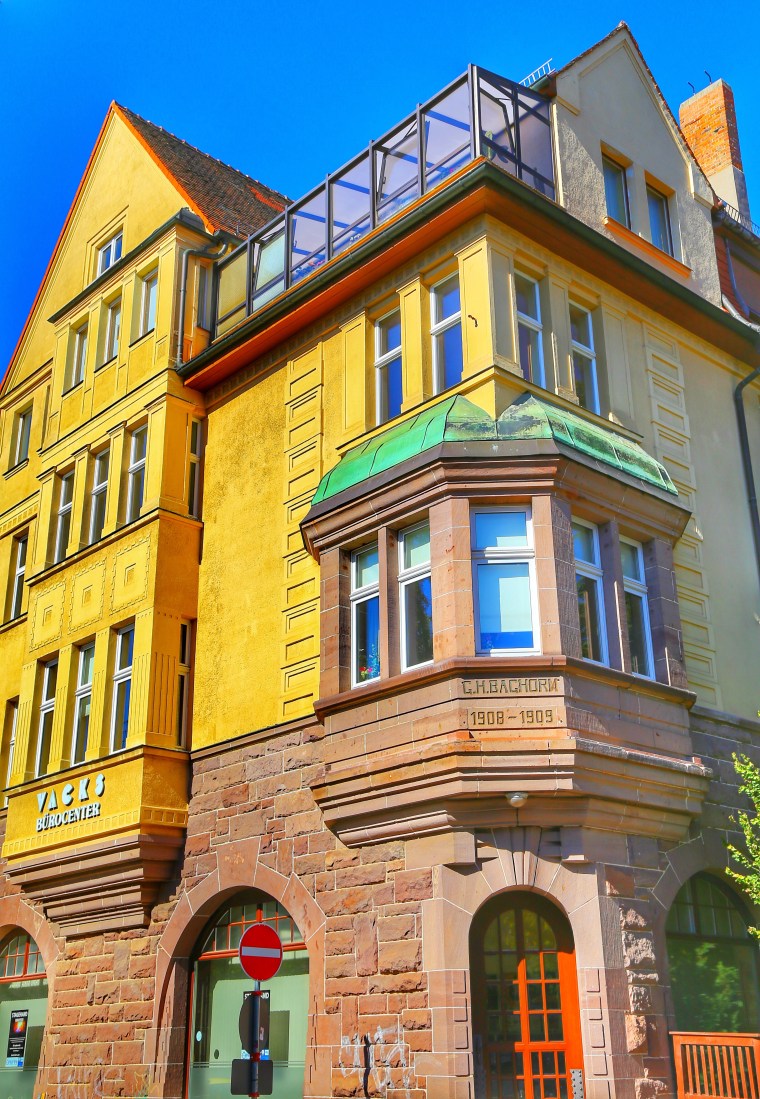
30sep18. Weimar, Germany 🇩🇪
 The Semperoper. Originally built by the architect Gottfried Semper in 1841. After a devastating fire in 1869, the opera house was rebuilt, partly again by Semper, and completed in 1878. The opera house has a long history of premieres, including major works by Richard Wagner and Richard Strauss. (Wiki)
The Fürstenzug (English: Procession of Princes) in Dresden, Germany, is a large mural of a mounted procession of the rulers of Saxony. It was originally painted between 1871 and 1876 to celebrate the 800th anniversary of the Wettin Dynasty, Saxony’s ruling family. In order to make the work weatherproof, it was replaced with approximately 23,000 Meissen porcelain tiles between 1904 and 1907. With a length of 102 metres (335 ft), it is known as the LARGEST PORCELAIN ARTWORK IN THE WORLD. The mural displays the ancestral portraits of the 35 margraves, electors, dukes and kings of the House of Wettin between 1127 and 1904.


28sep18. Dresden, Germany 🇩🇪

The Dresden Kreuzkirche. Built 1800.
 Frauenkirche.

 Lots of construction 🚧🔨 going on.

The Goldener Reiter (Golden Rider), a gilded equestrian statue of Augustus the Strong is one of Dresden’s best known landmarks.
The statue, showing the Elector of Saxony and King of Poland dressed as a Roman Emperor, stands at the Hauptstrasse, the main pedestrian boulevard in Dresden’s Neustadt district, just across the Augustusbridge from the Schlossplatz. http://www.aviewoncities.com/dresden/goldenerreiter.htm


 Herbstmarkt


 Dresden choirboy statue


 Ritter Sport chocolate 🍫 display in Dresden Central train 🚂 station


27sep18. Dresden , Germany 🇩🇪

 The Elbe River meanders through Dresden.
 Dresden Frauenkirche. Built in the 18th century, the church was destroyed in the bombing of Dresden during World War II. The remaining ruins were left for 50 years as a war memorial, following decisions of local East German leaders. The church was rebuilt after the reunification of Germany, starting in 1994. (Wiki)
 Knocked down Martin Luther statue in front of the rubble of the destroyed church. 1945. Photographer unknown.
 Stormy Waves 🌊 fountain by Robert Dietz in 1894.
26sep18. Dresden, Germany 🇩🇪


I am, I am, I am Superman and I know what’s happening
I am, I am, I am Superman and I can do anything… ~ REM


26sep18.Dresden, Germany 🇩🇪


15sep17 Frankfurt, Germany


14sep17 Munich, Germany
